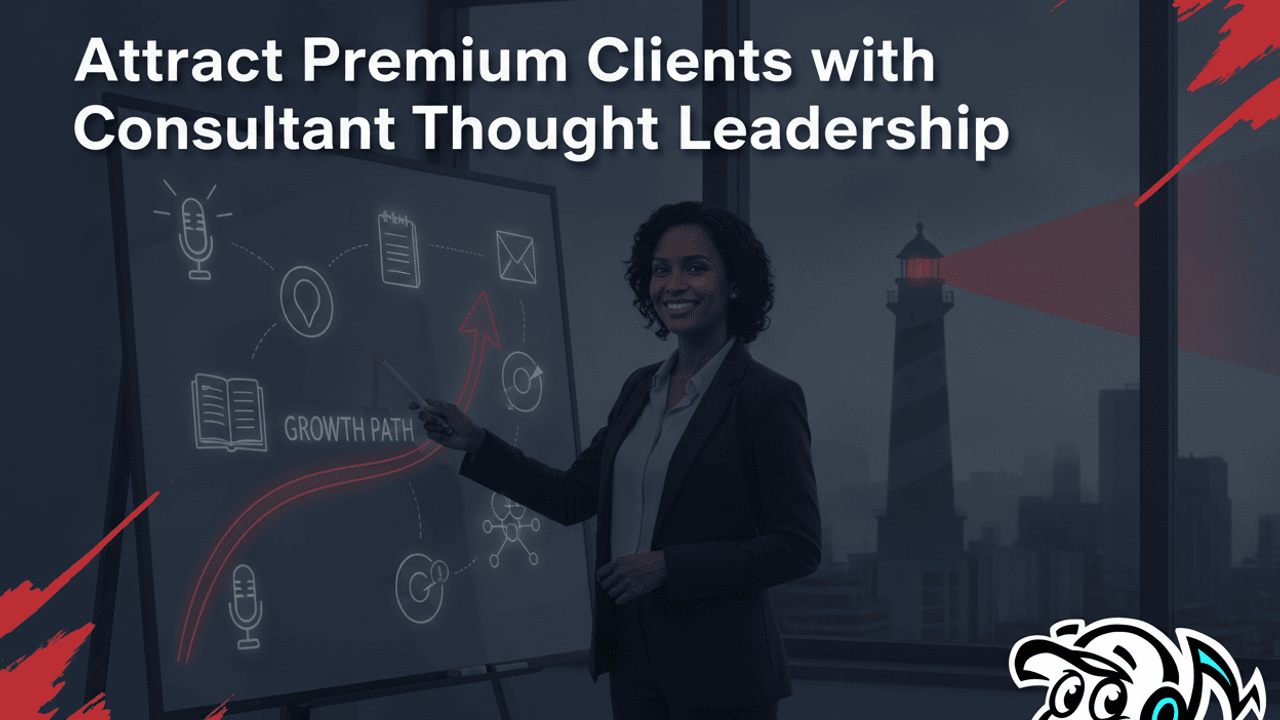
Introduction: Beyond Marketing – Why Thought Leadership Matters for Consultants
In today's competitive landscape, solo consultants, independent contractors, and small consulting firms face a significant challenge: how to stand out and attract clients who value expertise over low bids. The traditional marketing playbook often falls short, leading to a race to the bottom on price or a struggle for visibility amidst a sea of generic offerings. This is where thought leadership for consultants becomes not just a strategy, but a strategic imperative.
The Consultant's Challenge: Standing Out in a Crowded Market
The consulting world is increasingly crowded. As more professionals transition to independent work or niche agencies emerge, the market can feel saturated. For many consultants, the effort to acquire new business often involves reactive bidding, networking that yields inconsistent results, or relying on word-of-mouth that can be slow to scale. The core problem is often a lack of clear differentiation, leading potential clients to view consulting services as a commodity.
What High-Value Clients Truly Seek from Consultants
High-value clients, however, aren't just looking for another vendor. They seek trusted advisors who can offer profound insights, challenge conventional thinking, and guide them through complex problems with unique solutions. These clients are willing to invest in expertise that directly impacts their bottom line, drives innovation, or mitigates significant risks. They're looking for partners, not just service providers, and that partnership begins with credibility and demonstrated authority. To attract high-value clients consulting firms and individuals must project an undeniable level of expertise and insight.
Thought leadership moves beyond transactional marketing. It positions you as an authority, a go-to expert who consistently offers valuable perspectives, anticipates industry shifts, and provides solutions before problems fully manifest. This approach helps you bypass the commoditization trap, building a reputation that precedes you and naturally draws the right clients to your door.
Defining Authentic Thought Leadership for Consultants
The term "thought leadership" is often thrown around, but what does it truly mean for consultants? It's not merely about having a blog or sharing industry news. Authentic thought leadership for consultants is about consistently demonstrating deep expertise, offering original insights, and articulating a distinct point of view that influences the conversation within your industry.
More Than Just Content: Original Insight and Unique Perspectives
While content is the vehicle, true thought leadership is the intellectual horsepower behind it. It involves going beyond summarizing existing information. It's about:
- Original Research: Conducting studies, surveys, or experiments that uncover new data or trends.
- Novel Solutions: Proposing innovative approaches to long-standing industry problems.
- Challenging Norms: Questioning conventional wisdom and offering a well-reasoned, alternative perspective.
- Deep Specialization: Providing unparalleled insights within a very specific niche that few others possess.
This kind of content doesn't just inform; it inspires, provokes, and guides. It helps clients see challenges and opportunities in a new light, making your expertise indispensable. For more insights into how consultants can leverage thought leadership for business development, consider this foundational article on how consultants can market like a thought leader.
The Credibility Imperative: Building Trust and Authority
The ultimate goal of thought leadership is to build unshakeable credibility and authority. This isn't achieved overnight, but through consistent, high-quality contributions that demonstrate your expertise and commitment to your field. When you consistently share valuable insights, you:
- Establish Trust: Clients trust experts who freely share valuable knowledge.
- Showcase Foresight: You demonstrate an understanding of future trends and challenges.
- Attract the Right Audience: Your distinct point of view naturally filters out those who aren't a good fit and attracts those who resonate with your philosophy and approach.
- Build an Undeniable Reputation: Your name becomes synonymous with innovative thinking and reliable guidance in your niche.
This process of building authority is crucial for any entrepreneur seeking to make an impact. To explore a comprehensive guide to establishing thought leadership in media, you might find The Entrepreneur's Guide to Thought Leadership in Media helpful.
Building Your Foundation: Identifying Your Unique Consultant Perspective
Before you can lead, you must know where you stand. The most effective thought leadership stems from a clear, deeply understood perspective rooted in your unique experience and expertise. This foundation is essential to build authority as a consultant and ensure your message resonates with the right audience.
Pinpointing Your Niche Expertise and Value Proposition
Start by honestly assessing your own strengths and experiences. Where do you truly excel? What problems have you consistently solved for clients that others struggle with? Your niche isn't just a market segment; it's the intersection of your passion, expertise, and market demand. Consider:
- Your Unique Skill Set: What specific methodologies, technologies, or approaches do you master?
- Past Successes: What tangible results have you delivered? Which clients have you helped the most, and how?
- Untapped Potential: Are there areas where your expertise could solve problems that aren't currently being addressed effectively?
Your value proposition should clearly articulate the unique benefit you provide, distinct from your competitors. It's not just what you do, but the specific, measurable impact you create.
Understanding Your High-Value Client's Deepest Needs
Thought leadership isn't about talking about yourself; it's about speaking directly to the needs, challenges, and aspirations of your ideal clients. To truly attract high-value clients consulting efforts must be deeply empathetic. Conduct in-depth research to understand:
- Their Pain Points: What keeps them up at night? What are their most pressing operational, strategic, or growth challenges?
- Their Aspirations: What are their long-term goals? What does success look like for them?
- Industry Trends: How are broader market shifts, regulatory changes, or technological advancements impacting their business?
- Their Information Sources: Where do they go for trusted advice and insights?
By understanding their world, you can tailor your insights to be precisely what they need to hear, positioning yourself as a crucial resource.
Crafting Your Distinct Point of View and Guiding Principles
Once you've identified your expertise and understood your audience, it's time to articulate your unique perspective. This isn't about being controversial for the sake of it, but about having a well-reasoned, often contrarian, stance on key industry issues. Your distinct point of view should:
- Challenge the Status Quo: Offer a fresh take on a common problem.
- Be Evidence-Based: Support your claims with data, experience, or logical reasoning.
- Align with Your Values: Be authentic to who you are and what you believe in.
- Provide a Clear Direction: Guide your audience toward a better way of thinking or acting.
This perspective forms the core of your thought leadership. It's the lens through which all your content is created. For practical ways to establish yourself as a trusted authority in your niche, explore 7 Ways to Establish Yourself as an Authority in Your Niche.
Implementing Your Thought Leadership Content Strategy

With your unique perspective defined, the next step is to translate that expertise into compelling content. A robust consultant content strategy is essential for effective thought leadership.
From Expertise to Actionable Content: Practical Creation Steps
Your thought leadership content should not only demonstrate your knowledge but also provide actionable value to your audience. Consider a variety of formats to convey your message:
- In-depth Articles & Blog Posts: Share your unique insights, analyses of industry trends, or step-by-step guides.
- Case Studies: Illustrate how your approach has solved real problems for clients (with their permission, of course).
- White Papers & Ebooks: Offer comprehensive deep dives into complex topics, positioning you as a leading expert.
- Webinars & Workshops: Provide live, interactive sessions where you can engage with your audience and answer their questions.
- Podcasts & Video Series: Offer an audio or visual medium for sharing your perspectives and interviewing other experts.
- Research Reports: Publish original research that contributes new data or insights to your field.
Each piece of content should have a clear purpose, targeting a specific aspect of your audience's challenges or aspirations, and always offering clear, practical takeaways. For a detailed guide on building a B2B thought leadership marketing strategy that converts, this Content Marketing Institute article is an excellent resource.
The Power of Interview-Led Storytelling (and ToniPR's Role)
One of the most effective ways to extract your deep expertise and personal narratives for thought leadership content is through structured interviews. This method allows you to articulate your ideas naturally, often revealing nuances and personal insights that might not emerge in a self-written draft.
This is precisely where ToniPR can transform your content creation process. ToniPR is an AI-powered PR interview product designed to help founders, consultants, SMBs, and creators turn their spoken insights into polished, press-ready outputs. By engaging in a PR-style interview with Toni, you can effortlessly capture your unique perspective, expertise, and stories. Toni then processes these conversations, generating a range of valuable assets:
- Quotes: Ready for media outreach or social media.
- LinkedIn Posts: Tailored for professional engagement.
- Articles & Blog Posts: Comprehensive content pieces that articulate your thought leadership.
- Bios: Updated and compelling professional summaries.
This interview-led approach minimizes the writing burden, allowing you to focus on what you do best: thinking and advising. It ensures authenticity and efficiency, making it easier to consistently produce high-quality thought leadership content. To develop a strategic content approach to maximize your message and impact as a thought leader, refer to our Content Strategy for Founders: Maximizing Your Message.
Strategic Content Repurposing for Maximized Reach and Efficiency
Creating original, high-quality thought leadership content takes time and effort. Maximizing its impact requires a smart repurposing strategy. Don't let a great idea live in just one format or on one platform. Instead, think about how you can slice and dice your core insights:
- Transform a comprehensive white paper into a series of blog posts, an infographic, and several social media snippets.
- Extract key quotes from a webinar or podcast to create engaging LinkedIn posts or short video clips.
- Turn a long-form article into a presentation for a speaking engagement or a script for a video.
Repurposing ensures that your valuable insights reach a wider audience across different platforms, catering to varied content consumption preferences, all while making your content creation efforts more efficient. This strategy is vital for sustained visibility. You can learn more about how ToniPR supports building your authority and personal brand through interview-led content by reading Hadi Heidari on How ToniPR Transforms Founder Interviews into SEO-Optimized Authority & Personal Branding.
Amplifying Your Message: Distribution and Ethical Visibility
Creating compelling thought leadership content is only half the battle. To truly make an impact and attract high-value clients consulting services need strategic distribution. Your insights must reach the right eyes and ears through the most effective channels.
Strategic Channel Selection: Where Your Clients Are
Don't just publish and hope for the best. Be intentional about where you share your thought leadership. Consider:
- Your Own Platforms: Your professional website and blog are your home base, where you control the narrative and capture leads.
- LinkedIn: As the premier professional networking platform, LinkedIn is indispensable for B2B consultants. Share articles, post short insights, and engage in relevant groups.
- Industry Publications: Seek opportunities to publish guest articles or be featured in reputable industry magazines, online journals, or trade associations that your target clients read.
- Professional Forums & Communities: Participate authentically in online communities where your ideal clients gather, offering valuable insights without overt self-promotion.
- Podcasts & Webinars: Appear as a guest on industry podcasts or host your own webinars to share your expertise live.
The key is to meet your audience where they already are, providing value in their preferred consumption formats.
Leveraging LinkedIn for Professional Authority and Networking
LinkedIn is a powerhouse for consultants aiming to establish themselves as thought leaders. Here’s how to maximize its potential:
- Optimize Your Profile: Ensure your profile clearly articulates your niche, unique value proposition, and highlights your thought leadership contributions.
- Consistent Posting: Share your original articles, repurpose excerpts, and comment thoughtfully on industry news. Aim for a mix of long-form posts, short insights, and engagement with others' content.
- Engage Authentically: Don't just broadcast. Participate in conversations, answer questions, and offer genuine feedback on others' posts. This builds relationships and demonstrates your active presence in the industry.
- Utilize LinkedIn Articles and Newsletters: For more in-depth content, use LinkedIn's native article publishing feature. Consider starting a newsletter to deliver your insights directly to your followers' inboxes.
A consistent, value-driven presence on LinkedIn is crucial for building professional authority and networking effectively. For more practical best practices for B2B thought leadership, including leveraging social media, this MarketingProfs article offers valuable insights.
The Role of Ethical PR and Media Engagement for Credibility
While ToniPR helps you create press-ready content, it's important to approach media engagement ethically and strategically. Building relationships with journalists and media outlets can significantly amplify your message and enhance your credibility for consultants.
- Be a Resource: Position yourself as a go-to expert who can provide valuable quotes, background information, or analysis on industry topics relevant to journalists' beats.
- Craft Thoughtful Pitches: When reaching out to media, ensure your pitch offers genuine news value or a unique perspective, rather than just promoting your services. Focus on the insight you can provide.
- Build Long-Term Relationships: Don't just connect when you want something. Engage with journalists' work, share their articles, and offer help without immediate expectation of coverage.
- No Guarantees: Understand that media coverage is earned, not bought or guaranteed. Focus on providing genuine value, and opportunities will naturally follow.
Ethical PR is about building trust with the media, just as thought leadership builds trust with your clients. It's about contributing to the broader conversation in a meaningful way. For specific digital marketing strategies that can help consultants target high-value clients, refer to Digital Marketing for Consultants: Attracting High-Paying Clients.
Sustaining Your Leadership: Consistency, Impact, and Adaptation
Thought leadership is not a one-time campaign; it's an ongoing commitment. To truly establish and maintain your position as a credible authority, consistency, impact measurement, and a willingness to adapt are paramount.
The Long Game of Credibility: Why Consistency is Key
Building a reputation as a thought leader is a marathon, not a sprint. Sporadic content or inconsistent engagement will erode the trust and authority you're trying to build. High-value clients look for reliability and a sustained commitment to expertise. This means:
- Regular Content Production: Maintain a consistent publishing schedule, whether it's weekly, bi-weekly, or monthly. The frequency is less important than the regularity.
- Sustained Engagement: Continuously participate in industry discussions, both online and offline.
- Evolution of Ideas: Show that you're not static. Your thinking should evolve with the industry, demonstrating your ongoing learning and adaptability.
This consistent presence reinforces your position and deepens your credibility for consultants over time.
Tracking Engagement and Client Acquisition: Measuring What Matters
While vanity metrics like "likes" or "shares" can be gratifying, true thought leadership measures its success by its impact on your business and reputation. Focus on metrics that indicate genuine engagement and client acquisition:
- Lead Quality: Are the inbound inquiries you receive from your thought leadership efforts aligned with your ideal client profile?
- Speaking Invitations: Are you being invited to speak at industry conferences or participate in expert panels?
- Direct Inquiries & Referrals: Are clients reaching out directly, specifically citing your thought leadership content as their reason for contact? Are you receiving more qualified referrals?
- Website Traffic & Engagement: Beyond just visits, how long are people spending on your thought leadership articles? Are they downloading resources?
- Client Retention & Upselling: Does your ongoing thought leadership help solidify existing client relationships and open doors for additional services?
These metrics provide a clearer picture of how your thought leadership is translating into tangible business results.
Adapting Your Strategy Based on Feedback and Market Shifts
The consulting landscape is dynamic, and so too must be your thought leadership strategy. Regularly review and adapt your approach:
- Gather Feedback: Actively solicit feedback on your content from your audience and clients. What resonates? What could be clearer? What topics are they interested in?
- Analyze Performance: Review your chosen metrics regularly. Which content pieces perform best? Which channels yield the most qualified leads?
- Stay Current with Trends: Continuously monitor industry trends, emerging technologies, and shifts in client needs. Your thought leadership should anticipate and address these changes, keeping you at the forefront.
- Refine Your Point of View: As you learn and grow, your unique perspective may evolve. Don't be afraid to refine your guiding principles based on new insights and experiences.
By consistently evaluating and adapting, you ensure your thought leadership remains relevant, impactful, and continues to drive the attraction of high-value clients.
Frequently Asked Questions
What is the key difference between content marketing and thought leadership for consultants?
While content marketing focuses on creating and distributing valuable, relevant, and consistent content to attract and retain a clearly defined audience, thought leadership is a specific, higher-level form of content marketing. Thought leadership goes beyond mere information to offer original insights, challenge existing norms, and provide a distinct point of view that influences the industry conversation. It aims to position the consultant as an authority and innovator, rather than just a helpful resource. Content marketing can be broad, covering many topics, while thought leadership is deeply specialized and focused on unique, often proprietary, perspectives.
How often should a solo consultant publish thought leadership content to be effective?
The ideal frequency isn't a strict number, but rather about consistency and quality. For solo consultants, a realistic and effective schedule might be once or twice a month for in-depth articles, supplemented by more frequent, shorter posts or comments on platforms like LinkedIn. The key is to maintain a predictable rhythm that allows you to produce high-quality, well-researched content without burning out. Consistency builds anticipation and reinforces your presence, while quality ensures your message resonates and builds credibility.
Can small consulting firms truly compete as thought leaders against larger organizations?
Absolutely. Small consulting firms and solo consultants often have an advantage in establishing thought leadership due to their agility, deep specialization, and direct client interaction. Larger organizations can be slower to adapt and may have broader, less focused messages. A small firm can carve out a highly specific niche, offer truly unique insights born from hands-on experience, and build personal connections that larger firms struggle to replicate. Focus on depth over breadth, originality over volume, and authentic engagement to outmaneuver larger competitors.
What are the most effective channels for consultants to distribute their thought leadership content?
The most effective channels are where your target high-value clients spend their time looking for professional insights. For B2B consultants, this almost always includes:
- LinkedIn: Essential for professional networking, sharing articles, and engaging in industry discussions.
- Your Own Website/Blog: Your owned media allows full control, SEO benefits, and lead capture.
- Industry-Specific Publications & Forums: Guest posts or participation in highly relevant trade journals, online magazines, or professional communities can reach a targeted audience.
- Speaking Engagements/Webinars: Live events, whether online or in-person, offer direct interaction and position you as an expert.
- Email Newsletter: A direct line to your most engaged audience, allowing you to nurture relationships and share your latest insights.